How To Have A Flexible Routine For Your Homeschool Day
As a homeschooling mother of four, I know how hard it can be to take care of your home, homeschool your children and take care of your own health. Here is a simple way to flexibly structure your homeschool day.
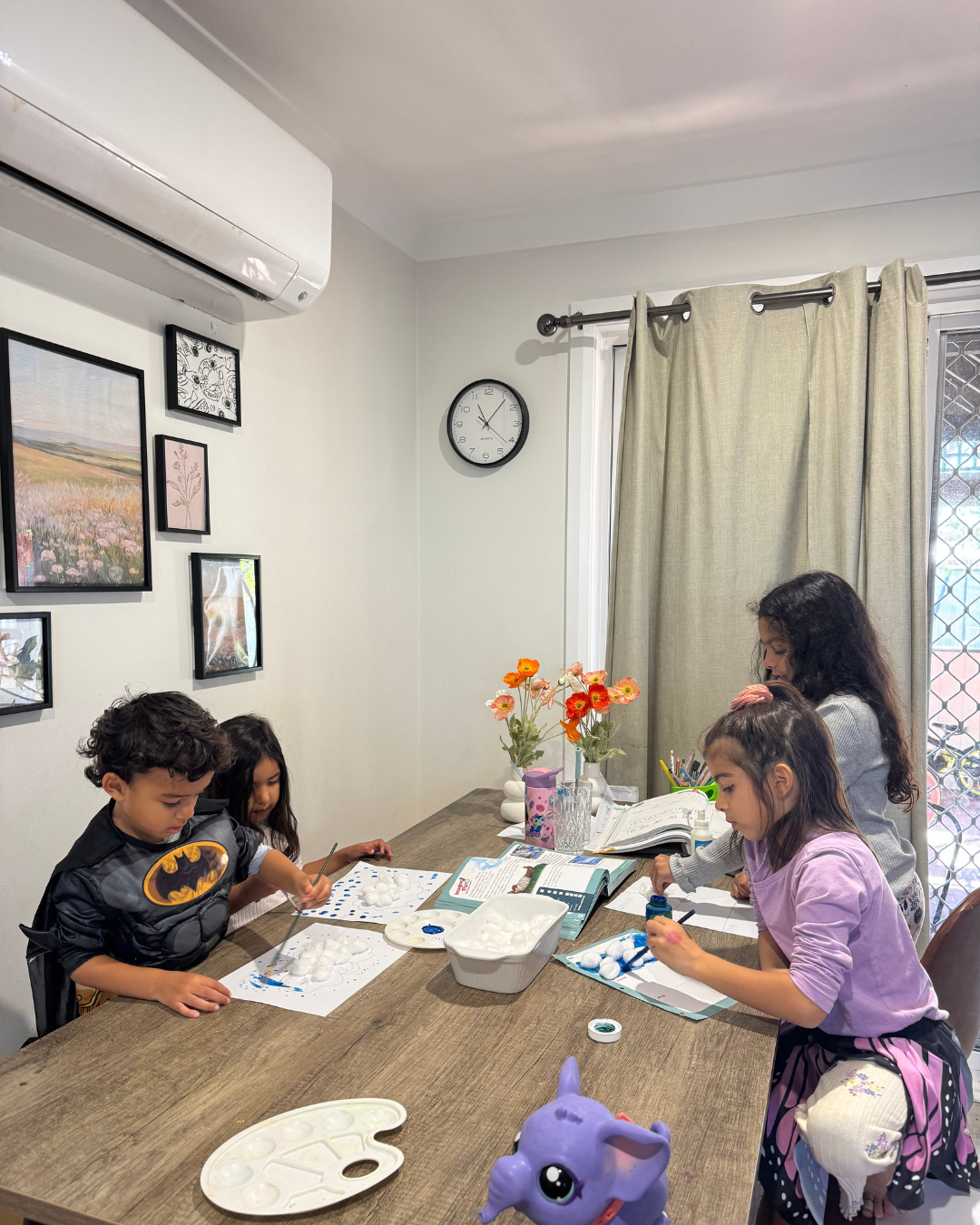
As a typical type A mother, I love structure and routine. When we first began homeschooling, I did everything in my power to ensure that my children were doing their book work from 9am to 11am.
However, my children were still little. I had a 6, 4 and 1 year old when we first started. Somewhere along the way, I had lost sight of the reasons we chose homeschooling in the first place.
We wanted our children to love learning, to not see it as forced or regimented. To grow up in a home that prioritises fun and play, and to learn together as a family.
While structure is not the enemy, it can be if you let it rule your home. Mothers tend to reinforce structure when they want to avoid chaos. But you can have a balance of flexibility and structure.
I call it rhythms.
Rhythms are powerful because they are anchor points that you can cling to throughout the day. They give the day cadence and meaning.
Rhythms are different to routine, because they are less structured and more flexible.
For example, a routine might be 8am: breakfast, 9am: learning time, 10:30am: snack, 11am: outside play.
Whereas a rhythm looks like: after breakfast we do learning activities, then when everyone starts getting restless we head outside.
What I Will Cover In This Post
- How you can create a flexible homeschool routine
- Some helpful tips to get started
- Some caveats to consider
How You Can Create a Flexible Homeschool Routine
As I mentioned before, rhythms are a wonderful way to set up your homeschool day. While structure and routine are great tools for getting things done, everybody knowing what to expect and staying on task; routines are rigid, and if you have little kids, I would suggest following a rhythm. You will notice that I use ‘routine’ and ‘rhythm’ interchangeably here (I am using ‘routine’ because more readers will know what I mean by that rather than ‘rhythm’, however, just know that I mean ‘rhythm’.)
If I were starting our routine from scratch, I would do the following:
- Write down two lists: one for homeschool work that must be done and one for homemaking that must be done.
- Assign the homeschool work and homemaking tasks into a Monday-Friday chart (I strongly suggest you mark the times as AM and PM, rather than specific time-frames).
- Add some margin into those AM and PM timeslots for flexibility (e.g. after homeschool work, leave some time to reset the home before lunch).
- Start each day with tasks that will take a large chunk out of your day, like laundry. Start preparing lunch and dinner while you prepare breakfast (even if it’s making a mental note of ingredients you need, like taking the meat out of the freezer to thaw out).
- Once you have your tasks assigned to each day, make sure to add in quiet time/rest time for the whole family (including yourself). This is a gamechanger for the home, as it marks the end of the morning rush of homeschool work and housework and as the beginning of the afternoon, which should be slower and and more at ease.
- Before you sign off on your flexible routine, ask your children (if they are old enough) to contribute to it and add in anything they would like (like a weekly trip to the library or some one-on-one time with mum).
- Trial your flexible routine for one week and make some adjustments as need be.
Some Helpful Tips To Get Started
- One thing that really helped me was having my husband go through the list of homeschool work and homemaking tasks to have more of his Type B perspective contribute to it (he would often give me permission to take breaks or remove some unnecessary tasks on the list).
- Delegate tasks to your children. Don’t underestimate how young you can start instilling those homemaking skills into your children. I recently taught my three year old how to make his bed and get dressed by himself. One way to tackle boredom is by giving your child responsibility and make play time a treat.
- The routine might work for one season and not for another. I often reassess our routine at the beginning of each school term and make adjustments where necessary.
- Quiet time is a must for the whole family. When my four children are either napping or having quiet play time in their rooms, I am putting my feet up, reading a book or doing something restful (even if it only lasts for 15 minutes). These quiet times help to regulate everybody’s emotions, allows the home to be quiet and still for some time and impacts the rest of the afternoon’s cadence. If you’re just starting quiet time for the first time with your older children, set an hour timer and tell them they must stay in their room (playing, reading, drawing, listening to an audiobook) until the timer goes off.
- When you first start implementing this flexible routine, try to stay at home most of the week to solidify the routine and see where you need to make tweaks.
Some Caveats To Consider
- If you have a newborn or a life-altering event, please know that your flexible routine will change. This is why we follow rhythms and not rigid routines, because life happens,
- If you have older children, routines can be helpful, as older children often need a bit more structure with their schooling.
- Your children’s ages matter. Trying to apply the same expectations across all ages can create frustration, so creating a flexible routine for each child would be ideal.
- Learning does not just happen from book work. Remember that you homeschool because you want your child to love learning. Make conversations at the lunch table educational, research different subjects of interest together as a family, learn outside if the weather permits. Change it up every now and then, so that you aren’t bogged down by rigid routine.
- Remember that flexibility does not mean that there is no structure. This is why rhythms are great because they nod to both flexibility and structure. Prioritise what needs to get done, without causing frustration and chaos.
I share about cultivating rhythms in the home to create peace and nourishment for you and your family. You can join the waitlist to sign up!
If you have any questions or other suggestions, feel free to comment below! I’m always up for learning and adjusting our homeschooling.