How to Start Homeschooling in 2027
This is a step-by-step guide to start homeschooling in 2027 for Australian families.
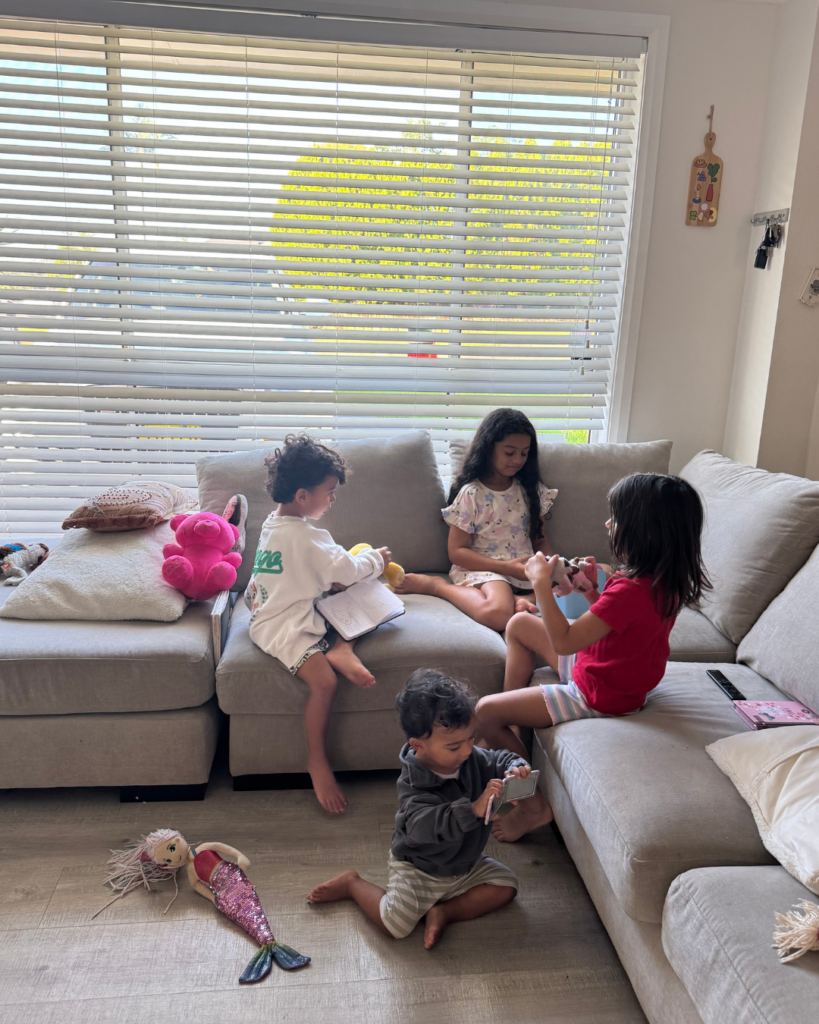
We are almost four years into our homeschooling journey. As a mainstream teacher, I saw the cracks in the school system and wanted to raise our children differently.
I want to make it clear that I am not against mainstream schooling. To each their own. Both my husband and I went to school and had an overall wonderful experience. However, from a teaching perspective, I wanted to give our children more time to be kids, to explore their own interests and learn their own way without being boxed in.
Over the past 3 and a half years, we have learnt a lot about what works best for our family.
No family will homeschool the same and that’s the beauty of it. However, if I were starting out again, here is what I would do.
What will be covered in this post
- Questions to ask before you homeschool
- Australian legal requirements
- Creating your homeschool philosophy
- What you need to begin
Questions to Ask Before You Homeschool
If I were starting out homeschooling all over again, I would sit down with my husband and answer these questions together.
It is important to be on the same page as a family. Homeschooling is a family commitment, even if only one parent is doing the teaching.
If you are considering homeschooling for 2027, make sure to answer these questions:
- Why are we considering homeschooling?
- What do we hope homeschooling will give our child/ren?
- What are our family’s current needs?
- What are our strengths as a family?
- What concerns do we have?
- What would homeschooling realistically look like for us?
Once you have asked those questions, it is time to look at the legal requirements for homeschooling in Australia.
Australian Legal Requirements for Homeschooling
The next few pages are copied from the homeschooling NSW website. If you belong to a different state, most of this information will still apply. However, if you belong to a different state, check with your state’s requirements for homeschooling.
What homeschooling is: Parents in NSW are allowed to choose home schooling to provide for the compulsory schooling of their children. Home schooling means that the parent takes responsibility for educating their child, primarily in the child’s home.
To be home schooled, a child must:
be registered by the NSW Department of Education, and
reside in NSW.
Homeschooling vs Distance Education: There is a difference between homeschooling and distance education. The difference is between who is responsible for the teaching program: in homeschooling, the parent or carer is in charge, whereas in distance education, a school and its teachers are in charge.
Registration process:
Research– contact a support group; talk to other parents; consider the resources available to you; review the requirements.
Plan your approach– identify your child’s learning strengths and needs; start to prepare your child’s educational program; consider the records you will keep; gather resources; organise learning spaces; be ready to show your planning and educational program to an Authorised Person.
Apply– access the Home Schooling Parent Portal or contact Home Schooling Directorate for assistance.
Prepare for implementing– gather your records of previous educational history and achievement, your child’s educational program based on NESA syllabuses, methods for learning activities, methods for recording achievement and progress, resources and suitable learning spaces.
AP Review– An Authorised Person will contact you to review your educational program and records.
Certificate– Registered children receive a certificate to confirm the registration.
To learn more about your state’s homeschooling requirements, visit https://www.nsw.gov.au/education-and-training/home-schooling
Create Your Homeschool Philosophy
Once you have registered your child for homeschooling in your state or territory, it is time to nut out your vision and philosophy for your homeschooling.
A philosophy will reflect your culture and values that you want to impart into your children.
Some questions to ask to build your philosophy could be:
- What do we believe education is for?
- What do we want our home to feel like?
- What are our family values?
- What do we want our children to know, love and be able to do by the time they finish homeschooling?
- What would make us look back in 10 years and feel that homeschooling was worthwhile?
I would encourage you to write this down somewhere and look back on it over the year as motivation and a good reminder of why you chose to homeschool in the first place.
If you want to learn about different curriculum choices and view a comparison chart of curriculum in Australia, make sure to check out my guide.
What You Need to Begin
I can’t stress the importance of not giving into pressure to buy everything when you first begin.
This part of homeschooling irks me. Not because I don’t enjoy buying things for our homeschooling, but because there seems to be a lot of pressure to have everything or have your homeschool set up aesthetically beautiful and grand.
For us, we currently do our homeschool work at our dining table. We don’t have a dedicated homeschool room. If you do, that’s great. But if you don’t, a dining table or a kitchen bench work just fine.
In terms of additional things you need to buy, it will depend on the curriculum you choose.
If you choose an online learning platform, you will most likely need a printer to print worksheets.
If you choose a paperback curriculum, the workbooks will be sent to you.
For standard stationery, you often need a set of exercise books, pencils, pens, colouring pencils, a ruler, rubber and a sharpener.
If your child is in K-2, different hands on materials, like base 10 blocks, counters, magnetic letters and numbers, unifix cubes and a mini whiteboard with markers are great for hands-on learning.
Keep it simple to start with and grow your collection of items as the year progresses.
Want to have more clarity and confidence to start homeschooling?
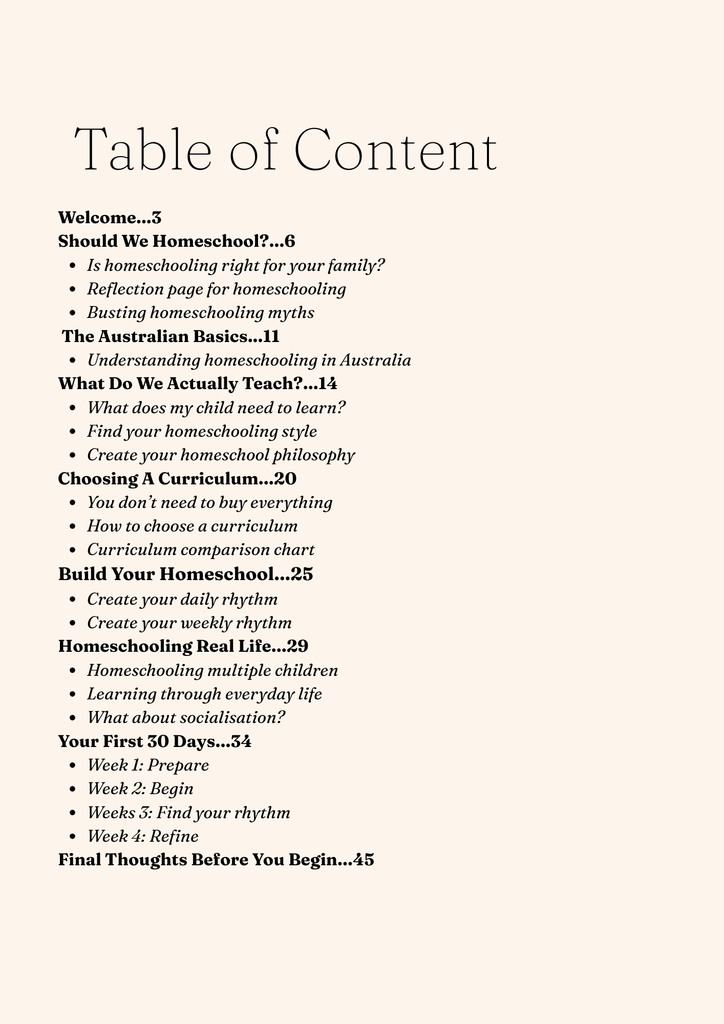
Grab my 45 page guide!