Iron Rich Foods For Babies
These iron rich foods for babies are whole foods based, nutrient-dense and can be incorporated into lots of meals.

It is so important for babies to be eating iron-rich foods from as soon as they begin solid foods.
Think about how much growing and developing a baby endures in their first year of life – rolling, sitting, clapping, eating food, crawling, cutting teeth, learning new words, learning to sleep through the night and so much more. All of which require important nutrients to help them.
There are many nutrients a baby needs to grow healthy, however, there is one nutrient in particular that often goes missed and that is, iron.
When I had my first two daughters, I did not even know about the benefits of delayed cord clamping for more blood volume to cross over from the placenta to baby to increase iron stores, let alone, the value of iron-rich foods for babies.
I will share with you why iron is important for babies between 6 and 12 months, why babies are at risk of low iron between 6 and 12 months, signs your baby may not be eating enough iron, iron bioavailability and the best iron-rich foods for babies.
What Will Be Covered In This Post
- Why iron is important for babies between 6 and 12 months
- Why babies are at risk of low iron between 6 and 12 months
- Signs your baby may not be eating enough iron
- Iron bioavailability
- The best iron-rich foods for babies

Why Iron Is Important For Babies Between 6 and 12 Months
Do you know that a baby between 6 and 12 months of age require more iron than a grown male? 11 milligrams in fact. Whereas a grown male only needs 8 milligrams a day. Wild, right?!
Iron is essential for transporting oxygen throughout the body. Sufficient dietary intake of iron helps to reduce the risk of anaemia, ensure proper weight gain, appetite, energy, and cognitive and brain development.
Of course, natural sources of iron are far better than synthetic versions or iron-fortified foods, like rice cereal. One of the reasons being that iron-fortified foods can make babies constipated.
Supplementation may be required for babies who have an iron deficiency or anaemia. I would definitely consider a whole foods supplement if available before turning to a synthetic iron supplement. Seek advice from your doctor first.
Why Babies are at Risk of Low Iron Between 6 and 12 Months
If your baby is breastfed, breast milk does not typically meet a baby’s iron needs at the 6 month mark, which is why starting solids at this age is ideal.
This is because most babies have used up the majority of their iron stores by 6 months, so iron-rich foods are important to build up those stores again.
As mentioned before, because babies grow so rapidly, their iron needs increase (babies require 11mg of iron a day!).
To put it in perspective, a baby should be having around 3 tablespoons of cooked/pureed lentils, 3 tablespoons of beef mince, 2 egg yolks and 2 tablespoons of spinach puree in order to meet their daily iron requirements.
While breast milk contains some iron, it is not enough to meet a baby’s iron needs at 6 months, so ensuring that they are eating iron-rich foods to complement iron in breast milk is important.
Formulas often contain fortified iron, so it is important that formula-fed babies are eating natural sources of iron for better absorption and less constipation.
Signs Your Baby May Not Be Getting Enough Iron
These are some signs that your baby is iron-deficient. Please seek medical advice if you notice any of these symptoms:
- Pale skin
- Fatigue/low energy
- Irritability or fussiness
- Slower weight gain
- Reduced appetite
- Frequent sicknesses
- Developmental delays

Iron Bioavailability
Iron is available in two forms: heme and non-heme.
Heme forms of iron are found in meat, seafood and poultry. Heme iron foods are 15-35% absorbable (study).
Non-heme forms of iron are less bioavailable. These are found in plant and iron-fortified foods. Compared to heme forms of iron, non-heme forms of iron are 2-13% bioavailable.
Ways to increase iron absorption:
Pair iron-rich foods with Vitamin C foods, especially non-heme iron foods, which increases their absorption by triple the amount.
Cooking with an iron cast pan: cooking in an iron cast pan has been found to increase the iron absorption of food. This depends on the food’s acidity, moisture content and length of cooking time.
The Best Iron Rich Foods For Babies
Okay, let’s get to the best iron rich foods for babies and how you can pair them with some Vitamin C foods for maximum absorption.
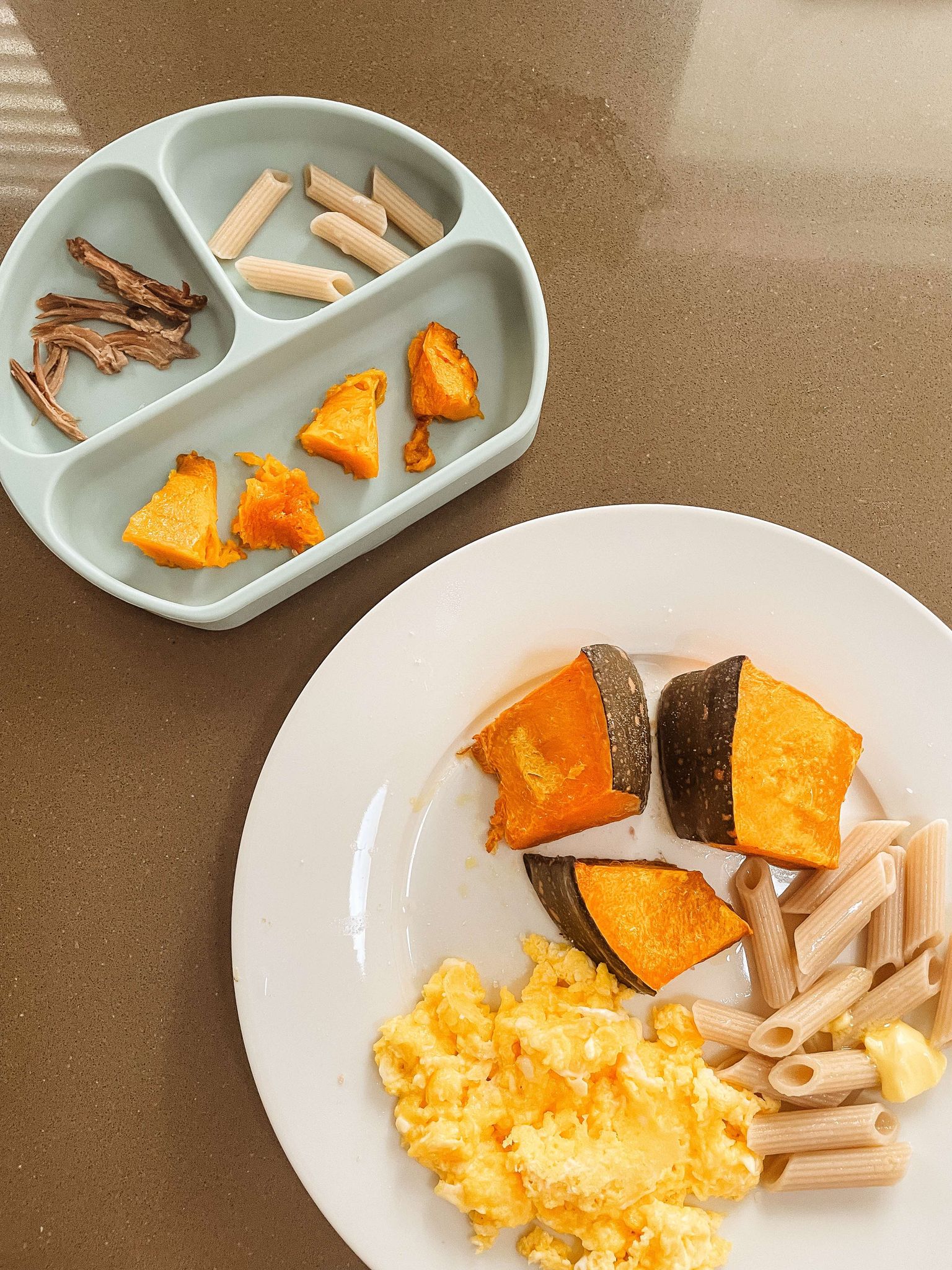
Heme iron foods (from most nutrient-dense to least nutrient-dense): organ meats (I like to buy desiccated beef liver and sprinkle it on my baby’s meal), duck, sardines, beef, fish, lamb, eggs, pork, ground turkey/chicken, turkey, chicken.
Non heme iron foods (from most nutrient dense to least nutrient dense): cooked lentils, cooked quinoa, beans, asparagus, cooked spinach, cooked snow peas, prunes, hummus, cooked potato, pumpkin seeds, nuts, kale, peas.
Pair non heme iron foods with fruit like strawberries, blueberries, oranges, mandarin, grapefruit, camu camu, acerola cherries, cherries and lemon or lime for maximum iron absorption.
Was this helpful? If so, I’d love it if you could let me know below!