How To Instill Healthy Eating Habits in Kids
It is one thing to feed your children healthy food. It is another thing to instill healthy eating habits in them. I’m going to share five simple ways to instill healthy eating habits in your kids.

As a Holistic Nutrition Consultant and Mum to four children, I am passionate about empowering other mums to make healthy food choices. I am also passionate about helping mothers to pass on that wisdom to their children.
When you are in agreement as a family in relation to food, it makes for easier meal times, lunchbox expectations and expectations around food at restaurants and at parties.
You might need to sit down with your partner and nut out how you want your family’s nourishment to look like, so that you are on the same page.
At times, it takes a bit of tweaking to see what works best for your family, so I would suggest to give it a 2-3 month grace period before making anything concrete, even for just a season.
As your children grows, there will be changes you will make along the way. But for the most part, stay intentional and consistent if your priority is to instill healthy eating habits into your kids.
What Will Be Covered In This Post
- It starts with the parent
- What a nourished family can look like
- How to instill healthy eating habits into your kids

It Starts With The Parent
They say it’s caught more than it’s taught.
Our kids are watching us, what we say, what we do and how we look after ourselves.
If we practice healthy habits, then it most commonly gets passed down to our kids. The opposite also remains true.
So, how are you looking after yourself?
What kinds of foods are you putting into your body?
Are you maintaining good health overall? Good sleeping habits, exercise and nutrition and so on.
Of course, there is no perfect way of doing it! We are not meant to display perfection by any means to our children, but if we want to instill healthy eating habits into our children, it starts with us.
What A Nourished Family Can Look Like
I believe that a nourished family is a family that eats meals together.
When you make meal time a family event, food becomes sacred; a fond memory.
Growing up, we would eat meals together as a family most nights. It is something I want to continue to do with my own family.
We reunite after a big day of school or work, we tell stories, we laugh and we eat.
I recently heard on a podcast that currently six out of 10 families don’t have regular meal times together. This is a sad statistic to me as the busyness of life and might I add, the media at our disposal is robbing us of family time.
The second thing that contributes to a nourished family is a family that eats real food.
The convenience of growing fast food chains, uber eats and restaurants means that our western society is eating a much poorer diet than we once did 100 years ago.
When we centre our meal times around real food, we naturally become a nourished family.
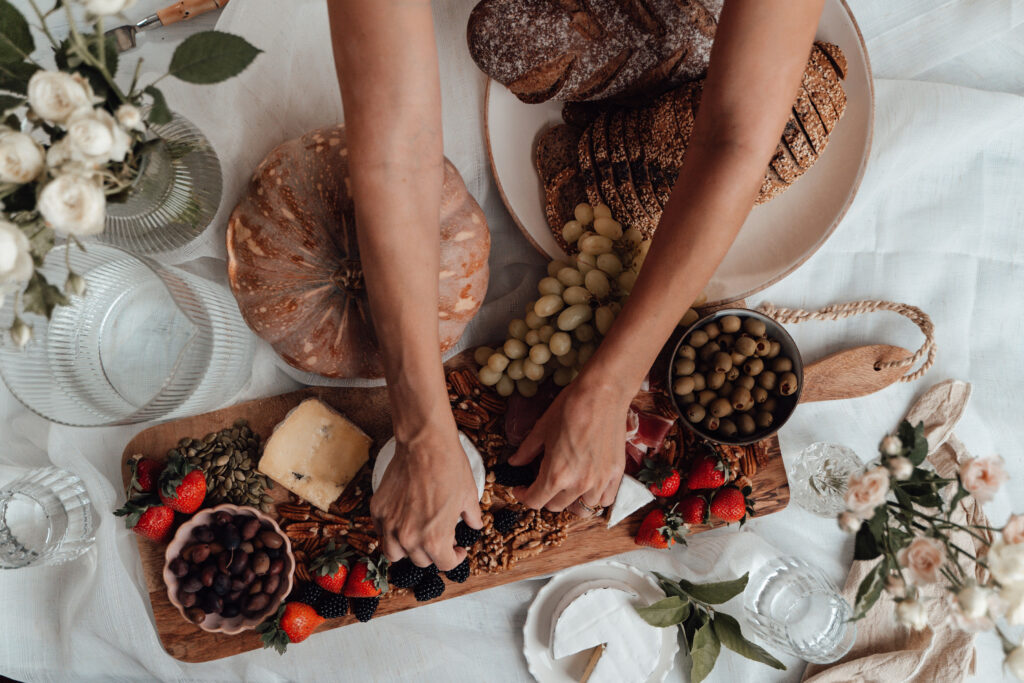
How To Instill Healthy Eating Habits Into Your Kids
While there are definitely more things you can do than this list alone to instill healthy eating habits into your kids, here is a simple start. You can start implementing these habits this week.
- Have clear boundaries when it comes to what your children can and cannot eat.
For example, my children know that they cannot have soft drink, even at parties. So, they don’t even ask.
Another rule we have is no sweets until after lunch. They will often try to persuade me to allow them one lolly right after breakfast, but that is a hard no!
Of course, be flexible. Especially when it comes to being on holidays or at special times of the year like birthdays and Christmas.
But the whole point is that your children need to know what to expect when it comes to what they can and can’t eat.
This helps them understand the value of enjoying fun foods occasionally, while eating a nourishing diet most of the time.
2. Teach them the value of eating a healthy diet and make them aware of how food makes them feel.
Often times, my older children will tell me they feel sick. We go through the list of the foods they have eaten today. They may have eaten too many sweets or too many snacks and not enough of their meals.
I am teaching them to understand how food affects the way we feel and that it is important to eat a nutritious diet for energy, satiation, good mood and behaviour (yes, food really does affect our behaviour!).
3. Give them choice (with boundaries).
If we become too strict about food, our children will often grow up ‘rebelling’ and swinging on the other side of the pendulum and make poor food choices. I have heard of this happening many times.
The point is to have a good balance.
I allow my kids to have lollies, chocolate and ice cream on occasion. The sweets we do have in our home are often carefully picked and the healthier alternative. But I give them choice and allow them to have something they enjoy once a day.
Children love autonomy. They love to be in charge in some way and this is a good way of giving them a healthy level of autonomy.
Whether it’s allowing them to buy three of their favourite snacks when you are shopping, or choosing dinner for that night or picking their favourite ice cream flavour, give them autonomy where you see fit.
4. Give them a variety of different foods!
Part of the reason many parents struggle to get their children to eat the meals that they make is because they only make the foods that their children enjoy.
It is so important to offer your children a variety of foods, even if you think that they might not like it. The point is to keep offering it until they do enjoy it.
My 7 and 5 year old girls have very different tastebuds. One girl likes her vegetables and meat, the other girl loves carbs, carbs and more carbs.
I did not do anything different with either of them, but I don’t differentiate their meals whatsoever. They get the same plate every night.
Even my 2 year old has suddenly a strong aversion to eating meat. I still offer it to him and I know that this phase will pass and he will enjoy meat again (see how to overcome picky eating in toddlers for more support).
A variety of foods means offering them meals with different foods and flavours, a variety of food in their lunchboxes (see my lunchbox snack ideas for more support), a variety of snacks, fruits and vegetables that will diversify their palate.
5. Be Intentional
I wish that there was a magic button that could produce healthy foods without the time and preparation involved. It does take time, but you can save time with batch cooking, making larger meals enough for leftovers and optimising on discounts and specials and buy in bulk.
It takes time to prepare food rather than get a packet of noodles out of the pantry and call it a meal (no shade on those who call this a meal on busy days!).
It takes time to teach your children how to prepare and cook the foods with you, so that when they are old enough, they can start cooking and give you a break from time to time.
It takes time to bake homemade goods or prepare snack platters rather than buy them in packets from the supermarket.
It takes time to select your dishes for the week and take inventory of what you have in the house already.
But it is worth it, I’m telling you!
Healthy eating habits are birthed from intentionality. The easy way out produces poor eating habits when it becomes regular.
And guess what?! You typically save more money when you eat real food from home – so I’d say that that is a big win!
Drop a comment below if you have any questions or suggestions for other readers!